Challenges
Gnosis leans into narrative play, and has little interest in simulating each sword stroke or the position of each foot on the map. Instead, being concerned with the soul of every story, conflict.
Some conflicts are merely obstacles, they don’t actively oppose the Heroes, they are just in the way. A storm when the Heroes are on a boat is an obstacle, it is unconcerned with the Heroes success or failure, it’s just in the way
Conflicts on the other hand are when thinking entities are at actual cross purposes. An art thief is in conflict with the Heroes protecting the museum. The two sides will adjust, try different tacts, even withdraw and try a different approach.
Sometimes a thinking entity is just an obstacle, their goals don’t conflict with what the Heroes want to accomplish, they’re just in the way. A bouncer may not be in conflict with the Heroes, but an obstacle the Heroes need to get around to get into the club. The bouncer’s goal is not to keep people out of the club, quite the opposite really, but they still may be an obstacle the Heroes must overcome in some way.
Whether an obstacle or a conflict, challenges are resolved by telling a story three times.
The first story is a story of the Heroes intent.
The second story is how the Hero is going to attempt to accomplish their intent.
Last story is what the Hero accomplished.
Actions, Challenges and Scenes
The group and GM should endeavor to only spend valuable time around the table on things that matter to someone. Fast-forward through shopping and travel scenes unless they matter to someone at the table.
This goes for challenges as well. Unless both success and failure are interesting, the interesting thing automatically happens.
Some challenges are simple, requiring only one Hero gaining a normal success to overcome them. Others are complex and have progress clocks that track how much more the Heroes must do to overcome the challenge. In these sorts of challenges when a Hero does something to overcome the challenge that is considered an action.
The Hero who least recently took an action, gets precedence to take an action at any given moment when trying to determine who gets to act. Every 2-3 Hero actions the GM should consider if the Challenge should do anything.
Since any attack includes risk of losing the engagement, depending on the nature of the challenge, they may not need to act that often since they will automatically be delivering reprisals against the Heroes that are attacking them.
Once a Hero with precedence decides to take an action, it’s time to declare an intent.
Intent
The Hero’s goal is almost never to hit someone with a weapon, they are hitting someone with a weapon for some other purpose, it is a means to an end. At the very least the Hero intends knock out or kill the person they are hitting, but in truth their intent may simply be to get past a guard, hitting them might be one way of doing it, but it is hardly the only way.
Articulating the actual intent, is the first story.
Strategy
With an intent firmly defined, it’s time to tell the second story, the Strategy the Hero intends to use to achieve their intent.
This is where the player chooses which Boons the Hero will use, one per attribute.
A Hero with the intent of getting into the VIP section of a nightclub might build a Strategy such as:
Power: Heir to the Markowski fortune (tier 2)
Precision: One of the Beautiful People (tier 1)
Possibility: Location: Nightclubs (tier 2)
or:
Power: Repeating heavy blaster (tier 2)
Precision: Headshot (tier 2)
Possibility: Shock and awe (tier 1)
Both tell a story of how the Hero gets into the VIP lounge, but they tell very, very different stories. If the Hero’s goal is to schmooze a bigwig for a job opportunity, the second strategy may not be the best, but if the goal is to assassinate the bigwig, either might work.
The Strategy that the player builds for their Hero is the second story, the one that tells how the Hero will accomplish their intent.
Difficulty
With a proposed Strategy in place the GM should set a difficulty, this is likely done by setting the size of the Pain Pool, though for some rolls the GM may choose to use a static difficulty.
Whichever the case, the number of dice, or target number, should be shared with the player. Assuming the Hero is not incompetent in the area of conflict they’ll have some sense of the difficulty of what they’re trying to do.
If the GM and player have very different ideas of the difficulty that might be because they have different understandings of the situation, and it’s best to clarify that situation and let the player choose a different course of action for their Hero.
The GM will set the size of the Pain Pool, which is the number of d10s they’ll be rolling in opposition to the Hero’s Attribute Roll. Like players, they will only keep the best 3. The fourth die is quite impactful, but the 12th, doesn’t significantly move the needle, just like Hero’s Strategies.
Name |
Pain Pool Size |
Static Difficulty |
Mean Result |
|---|---|---|---|
Unskilled |
3 |
16 |
16.6 |
Apprentice |
4 |
20 |
19.7 |
Journeyman |
5 |
22 |
21.6 |
Master |
6 |
23 |
22.8 |
Heroic |
7 |
24 |
24.0 |
Artist |
8 |
25 |
24.8 |
Inconceivable |
9 |
26 |
25.5 |
Epic |
10 |
26 |
26.0 |
Legendary |
11 |
26 |
26.4 |
Mythic |
12 |
27 |
26.8 |
There are diminishing returns on large pain pools. Before seven dice an additional die is more impactful than a +1 result, after that point and the reverse is true.
Heroes using just their Boons can have at most three levels of advantage in each attribute pool, which is approximately equivalent to a 9 die Pain Pool (25.3 vs 25.5). Even if they have all those Boons, by the nature of tier 3 Boons, they should only be able to bring that to bear under limited circumstances.
There comes a point where what you’re trying to confront the Heroes with is an impossible challenge which probably should be more correctly handled with Effect, rather than adding more dice to the Pain Pool.
Effect
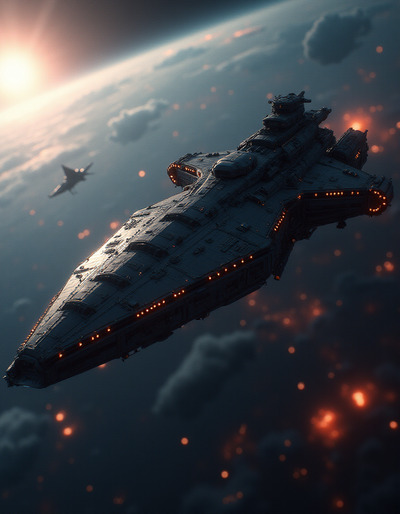
Not all opposing forces operate on the same scale. A normal person facing down the mile long imperial dreadnought while only armed with a six-shooter, is not going to be able to overcome that difference in scale and adding more dice to the Pain Pool isn’t going to be able to represent that difference.
If the scale is only marginally different or if the challenge is something that could be handled, but it’s going to take prolonged effort, than simply adding a Progress Clock may represent the effort it will take to overcome the challenge.
If so, draw the progress clock wherever your group keeps them and disclose it when you disclose the difficulty.
For challenges that verge even closer to impossible, there will be additional penalties to a Hero’s effectiveness. By default, Heroes are assumed to have Similar Power to the challenges they attempt to overcome.
Scale Difference |
Critical Failure |
Failure |
Tie |
Success |
Critical Success |
|---|---|---|---|---|---|
Unheroic |
1 effect lvl at a cost |
1 effect lvl |
2 effect lvl |
3 effect lvls |
3 effect lvls |
Punching Down |
1 cons |
1 effect lvl at a cost |
1 effect lvl |
2 effect lvl |
3 effect lvls |
Similar Power |
2 cons |
1 cons |
1 effect lvl at a cost |
1 effect lvl |
2 effect lvls |
Punching Up |
3 cons |
2 cons |
1 cons |
1 effect lvl at a cost |
1 effect lvls |
Severe Underdog |
3 cons |
3 cons |
2 cons |
1 cons |
1 effect lvl at a cost |
Impossible |
3 cons |
3 cons |
3 cons |
2 cons |
1 cons |
Scale is not just about size, but it’s about power. A cosmic level superhero may tear through that imperial dreadnought without slowing down. In a lot of genres size and numbers correlate with power, but not in all genres.
Strategy is important here. Tunneling through a mountain with a teaspoon is Impossible, while following the path around the base of the mountain might not even be an obstacle, but both get the Heroes to the other side of the mountain, if that was the real goal.
Taking one or more consequence level generally means the Hero took Stress or Blood depending on Risk. Gaining one or more effect level means the Hero overcomes the Challenge or fills a segment of a progress clock and moves closer toward overcoming a complex challenge. If it comes at a cost, that means that even if successful, something bad happened in the narration.
Risk
Almost all challenges have consequences, otherwise they wouldn’t be challenges, but not all consequences are equal.
Challenges are Safe, Stressful or Bloody.
- Safe:
Usually an entire challenge is not safe, but a certain action might be. A flashback or assess action are often safe. Safe challenges also might be challenges that aren’t dangerous themselves, but how much time is taken on them is important.
Consequences for Safe challenges don’t normally inflict stress or blood. Effectively the consequences only have a narrative impact. The Hero’s failure to bribe the guard might not have caused any stress, but that guard might recognize the Hero later on. Or the guard may attack and now the Heroes are faced with a Bloody challenge.
Complex challenges are rarely safe.
- Stressful:
This is the default risk for non-violent encounters. Consequences in these sorts of challenges will usually inflict Stress rather than Blood. Both impair the character, but Stress is easier to recover, taking less time than Blood.
These tend to be social, intellectual and some forms of spiritual challenges. Attempting, and failing, to push your agenda at the Royal Academy only rarely results in blood being spilt, but its damage is just as real.
See Social Challenges for a discussion about what non-violent challenges are safe and which are stressful.
- Bloody
This is the default risk for violent encounters. If you take a consequence in this sort of challenge it generally means your clothes have holes in them and are stained red with blood. The Hero will take Blood damage which causes the same penalties as Stress, but takes longer to recover from.
These challenges are violent or dangerous. Things like driving the trolls off with violence or defending your honor in a duel with laser pistols are Bloody challenges.
Mechanically the only difference is the expected sort of consequences a Hero will take if they fail their Attribute Roll.